
Press review
"We now offer GFIs short training courses anchored in their operational practice."
October 19, 2025
The ISFB and SPHERE are joining forces to offer independent asset managers short, targeted training courses that are directly applicable to their daily professional lives. This partnership marks a new stage in the ISFB's strategy, which is broadening its scope of action and strengthening its commitment to key players in the French-speaking Swiss financial center, with a single ambition: to support them in developing their skills.
What is the rationale behind the recently announced collaboration between ISFB and Sphere?
The ISFB is a professional association dedicated exclusively to the banking and finance sector in French-speaking Switzerland. For almost forty years, we have been supporting the skills development of a large number of financial institutions with which we have established genuine relationships of trust over time. The ISFB and SPHERE share a common ambition to support independent asset managers in developing their skills so that they can better adapt to an increasingly complex environment. The ISFB's commitment to SPHERE is to offer independent managers a specific, short, and pragmatic continuing education program that complements current offerings.
What strategic direction have you wanted to give the ISFB in recent years?
In early 2023, we repositioned the Institute to make it a key player in promoting skills and employability in the banking and finance sector. We are thus at the service of ISFB member institutions and professionals who are looking to evolve or change direction in their careers. In concrete terms, this has resulted in the overhaul of our offering, the strengthening of our academic and institutional partnerships, and a conscious opening up to new professions in the sector.
What have been the most significant developments for the ISFB since you took over as director?
Among the notable developments, I would first highlight the strategic repositioning undertaken by the ISFB in 2023. This led to the launch of new specialized training programs: risk management and internal control, data management, staff and support functions, risk governance for boards of directors, and management and adaptability. We also structured a comprehensive range of HR services for smaller organizations: training request management, assessment, coaching, skills assessments, outplacement, and recruitment.
Another significant step forward has been the creation of a scientific committee composed of program directors, all of whom are experienced senior executives within financial institutions. Their direct knowledge of the field allows us to continuously adjust our offering with a high degree of relevance.
Finally, we have consolidated our processes and management tools to meet industry standards for continuing education, including EduQua:2021, ISO, and SAQ.
What do you think are the major challenges facing training in the financial sector today?
When it comes to skills management, the financial sector faces threefold pressure: regulatory, technological, and generational. These upheavals require continuous skills development, enhanced soft skills, and the ability to constantly reinvent oneself. Training has always been—and will remain—a factor in strategic competitiveness, but this is becoming even more salient today.
How has the ISFB structured its offering to adapt to new market needs?
It has been structured around four areas. First, continuing education leading to a specialization qualification. Second, preparation for Swiss and international certifications, notably SAQ, which has become the market standard in the consulting field. Third, career development support and talent management. And fourth, promoting the professional network through conferences and surveys.
This integrated approach allows us to meet the needs of both institutions and individuals. We combine interbank and customized training, face-to-face and remote sessions, and technical and behavioral approaches. Our added value? A keen understanding of the market, the ability to adapt quickly, and constant proximity to our members.
Why this particular interest in independent managers?
Since 2025, the ISFB has expanded its scope by offering independent asset managers the opportunity to join the association. We want to fully reflect the diversity of players that make up the French-speaking Swiss financial center. This interest is part of our broader mission to serve the banking and financial ecosystem. The ISFB has long offered them certifications in high-level specializations, and more recently, tailored HR support to attract and retain talent. Now, through the SPHERE-ISFB partnership, they also have privileged access to short training courses rooted in their operational practices.
If you had to assess their skills, what would it look like?
We do not claim to make this assessment on their behalf. Managers know better than anyone else where they stand and what they need. Our role is rather to support them in their own reflection on the specific topic of skills development within their organization. To do this, we provide them with methods and an outside perspective based on extensive knowledge of practices among other players in the sector, numerous HR tools, and a vast network of specialized contributors. We help them identify areas for development without taking a prescriptive stance.
What are their specific needs, based on the feedback you have received?
Our discussions with independent managers reveal some very specific needs. They want to stay up to date in a complex regulatory environment, structure their development without sacrificing their entrepreneurial agility, and keep control of their expenses. They also frequently mention the need to exchange ideas with their peers and have access to support formats that are targeted, short, and immediately useful.
Where do you want to take ISFB in the long term?
In the long term, I want the ISFB to fully embody its mission as a collective brand serving the entire banking and financial sector in French-speaking Switzerland. We will therefore continue our commitment to structured, recognized skills development that is truly connected to the needs of the field. We must continue to innovate, strengthen our role as a catalyst between institutions, experts, and talent, and defend a demanding approach based on local roots, Swiss quality, and proximity. More than just an institute, the ISFB must be a reliable benchmark for skills, an accelerator of professional careers, and a strategic player within the French-speaking Swiss financial ecosystem, working in synergy with economic umbrella organizations, universities and colleges in French-speaking Switzerland, and public partners.
Mathias Baitan
Institut Supérieur de Formation Bancaire
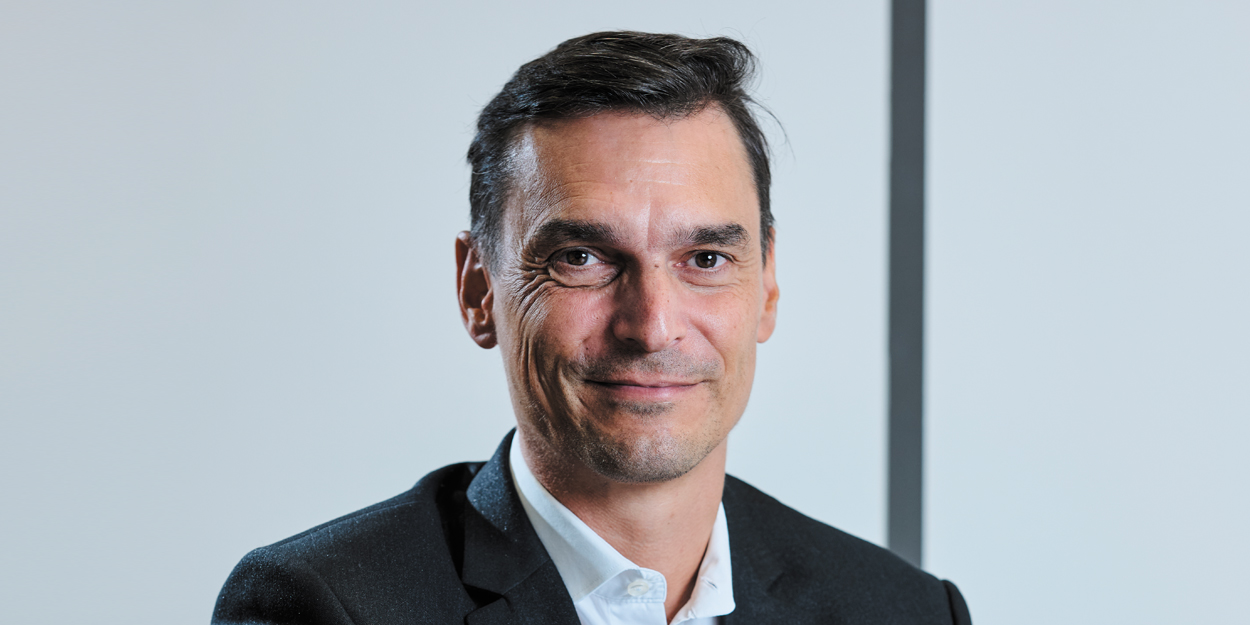
Mathias Baitan has been head of ISFB since the end of 2022. Prior to this, he worked for BCGE for over 20 years as HR manager, chief of staff to the CEO, and head of administration, while also lecturing at the Geneva School of Business and Management. He holds a PhD in Economics and Social Sciences from the University of Geneva, a Master's degree in Business Management, a Bachelor of Science degree in Psychology, and a federal diploma in Human Resources Management.


