ISFB Insight
Hold on to your intention without becoming a prisoner of the plan
October 1, 2026
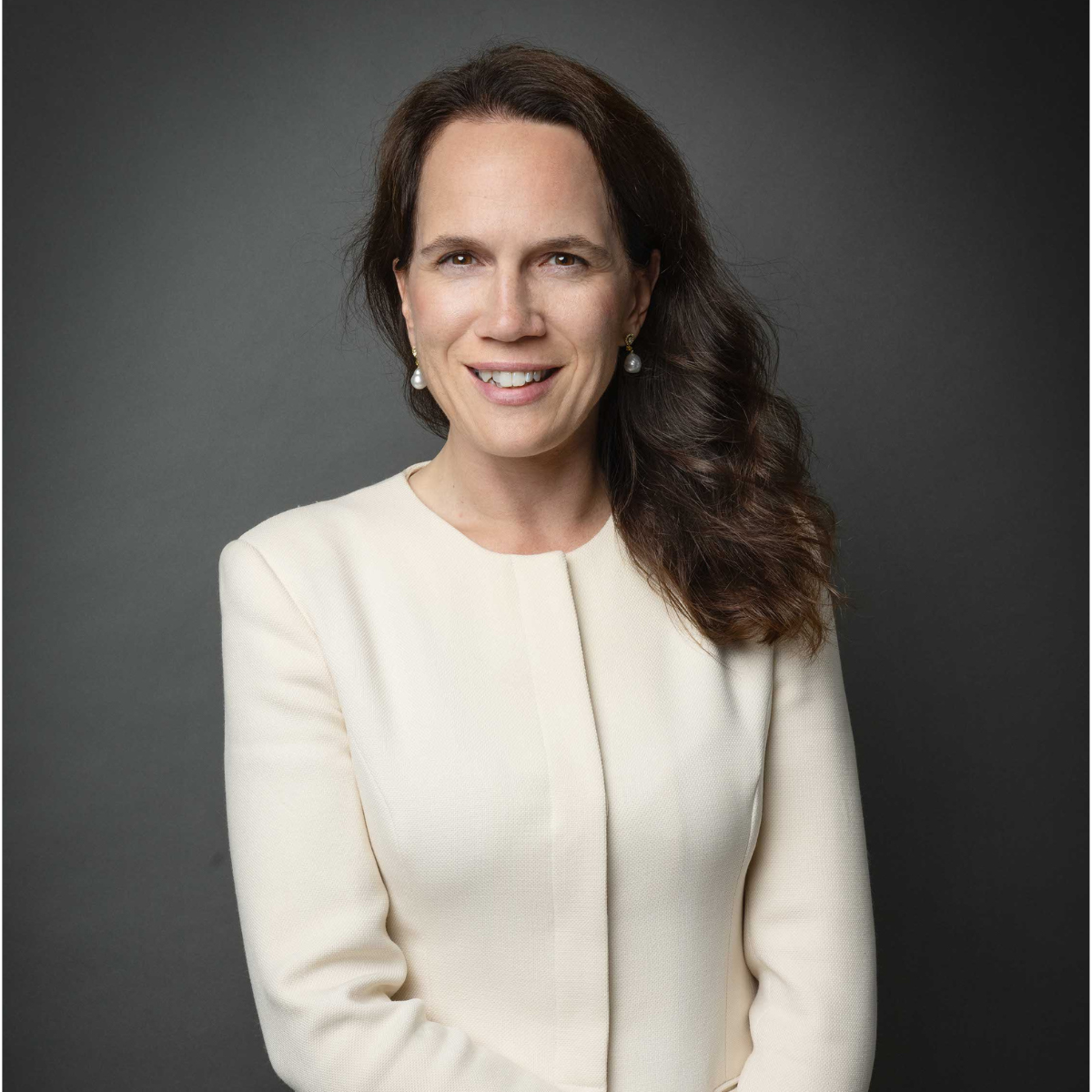
To mark his four years as director of the ISFB, Mathias Baitan reflects on what these years have taught him and how this experience has contributed to the creation of the ISFB Skills Observatory. Because moving forward isn’t just about following a plan. You have to know where you want to go, carefully observe what’s actually happening on the ground, and then adapt, slow down, or speed up—and sometimes even decide to stop an initiative. This approach is particularly evident in the creation of the ISFB Skills Observatory.
Interview by Salima Barragan
October 1 marked your fourth year as director of the ISFB. Looking back, what were the main challenges you faced, and what lessons have you learned from them today?
Four years is not a long time in the context of a career or a company. But it is an opportunity to pause for a moment and reflect on what leading an organization means to me today. This reflection, of course, did not begin in 2022. For more than twenty years, various roles have exposed me, in different contexts, to transformations, reorganizations, or simply to those moments when an organization must evolve without ever having all the information needed to know exactly how to do so.
I don't think experience provides ready-made solutions. Rather, it serves as a library of situations that helps us recognize certain signals and better interpret what we observe.
After more than twenty years of holding leadership roles in transformative environments, how would you define the fundamental role of a CEO today?
I believe more and more in the concept of intention. An organization must know where it wants to go. This intention gradually becomes a strategy, then a plan, priorities, and actions. And then the plan collides with reality: available resources, customers, employees, skills, partners, resistance, and unforeseen events. Some initiatives will move more slowly, while other opportunities will arise along the way that no one had anticipated.
Of the management and decision-making approaches that have left a lasting impression on you, which ones do you think are most relevant for leading in today's environment?
Herbert Simon’s work on bounded rationality, and that of Daniel Kahneman and Amos Tversky on our judgmental biases, continue to be helpful to me. They serve as cognitive crutches: not so much to tell me which decision to make, but to remind me that a decision is always made based on an imperfect understanding of the situation. We must therefore make a choice, while accepting that we might be wrong. And we must also accept that a good idea will amount to nothing if it doesn’t receive enough time, energy, or resources. We can’t do everything. Strategy is also a discipline of sequencing and letting go.
How do these beliefs about intention, sequencing, and decision-making specifically influence strategic thinking at the ISFB?
This issue is very much at the forefront of our strategic thinking at the ISFB. The order in which initiatives are undertaken matters just as much as their number, and spreading ourselves too thin poses a risk in and of itself. But between intention and action lies, in my view, something even more important: skills. A strategy requires us to ask ourselves what capabilities are needed to implement it, which ones are already in place, which ones need to be acquired or strengthened, and, above all, how to create true synergy among them.
A strategy truly takes shape when the necessary skills and resources are brought together. This is probably one of the most important aspects of a leader’s role, but also one of the most delicate. Because behind every skill, there is always a person. I place particular value on competence, with a very specific requirement: it must be genuine, useful to the organization, and capable of being harnessed for the collective good.
You place a central emphasis on skills as key to the success of a strategy. How can a leader create the conditions that allow individual talents to become a true collective strength?
When the necessary skills are in place and begin to complement one another, the leader’s role may itself evolve. During certain phases, the leader must be very involved, providing direction and setting the pace. Then, some of the responsibilities the leader previously shouldered directly may be integrated into the organization. The CEO maintains the overall vision and coherence, without being expected to remain the primary driver of action over the long term.
But this process is not linear. As uncertainty increases, the balance can shift rapidly. Some people seek to regain more control, while others put their actions on hold or distance themselves. In these situations, I have long turned to four very simple dimensions: connection, rules, meaning, and action.
This framework has evolved gradually through my professional experiences and research. Obviously, it doesn’t provide a single answer to any given situation, but it helps me focus on what remains intact even when the organization is under strain: the connections between people, the clarity of the framework, an understanding of the intent, and the ability to keep moving forward.
At times like these, I like to think of the CEO as a temporary guardian of organizational resilience: he or she strengthens certain pillars when necessary, then gradually hands the reins back to the team. An organization that relies on its leader in the long term to manage day-to-day operations remains vulnerable.
The ISFB Skills Observatory is one of the standout initiatives of 2026. How did this idea come about, and what need did it seek to address within the banking and financial ecosystem?
The ISFB Observatory did not arise from an explicit request from our members but rather from the recognition of an underlying need: the need for a more coherent understanding of skills in order to observe how they are changing, especially given that they are evolving particularly rapidly.
It took providing momentum, persuading others, bringing together expertise, finding resources, and gradually building the system. This is another aspect of a CEO’s role: while responding to an expressed need is one skill, recognizing a collective need that has not yet been articulated and successfully developing a solution around it is another.
Ultimately, these topics are interconnected: first, an intention; then, a strategy to give it shape; next, a plan to select the resources and bring together the necessary expertise to take action; and finally, enough flexibility to accept that reality never quite conforms to the strategic plan.
The ISFB Observatory is a good example of this approach. It began with a need that had not yet been clearly articulated, and then gradually took shape thanks to the expertise, partnerships, and resources brought together for the project.
Four years after I took over as head of the ISFB, I find it quite symbolic that we are opening our framework for key banking functions to the public on October 1, of all days. This is an important milestone, but above all, it lays the groundwork for what lies ahead.
© Institut Supérieur de Formation Bancaire (ISFB). All rights reserved.
The analyses and content published by the ISFB may be quoted or reproduced in part, provided that the source is clearly mentioned. Any full or substantial reproduction of this article in another medium or format is subject to the prior written authorization of the ISFB. In order to facilitate reading and without any intention of discrimination, the masculine gender is generally used, in accordance with the grammatical rule that allows it to be used as a neutral value to refer to a group of people comprising both men and women. This publication is intended for ISFB members and their employees in Switzerland, as well as anyone interested in finance in Switzerland. It is not intended to be read or distributed in any jurisdiction where its distribution would be prohibited.