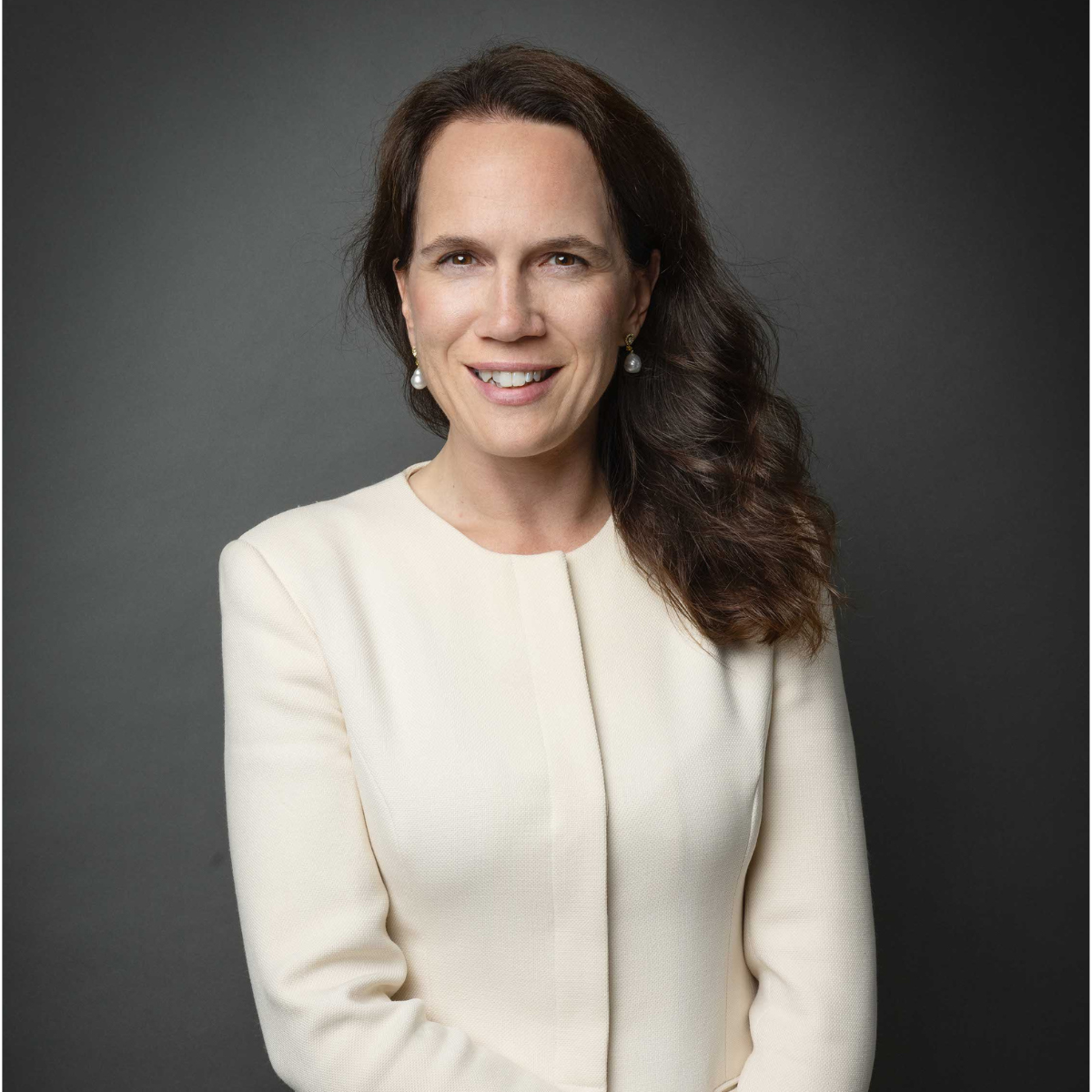
ISFB interviews
Ewa Lombard reviews the latest Sustainable Finance Hack organized by Open Geneva

Ewa Lombard, you led the ISFB challenge at the last Sustainable Finance Hack organized by Open Geneva, as part of the Building Bridges week last October. Can you tell us more about it?
You're welcome. A Hackathon is an open innovation event lasting 24 hours. Anyone can take part, diversity being the key to collective intelligence. The Sustainable Finance Hack is a satellite of the Building Bridges program, focusing on the theme of sustainable development. It is organized once a year by the non-profit organization Open Geneva, with the support of researchers and students from the University of Geneva. Teams work on solutions to be challenged and present them in a 2-minute pitch at the end of the 24-hour period. There are no material prizes, although we do vote for the three best presentations. The aim is to do good for the community, learn from each other and have fun. In teams of 8, participants work on sustainable finance challenges proposed by the challenge sponsors. This year, eleven challenges were proposed by university laboratories, financial institutions, non-profit organizations such as ISFB, and startups. This is the 4th time I've taken part in this hackathon, and I can honestly say that, for me, it was the best one yet: firstly, because I was able to put forward a problem I really cared about, and found some great people motivated to work on it with me, and secondly, because our pitch was one of the audience's favorites!
The ISFB challenge, which won third place, was aimed at proposing a responsible management program for bank executives in French-speaking Switzerland. How did the hackathon go?
After several exchanges with ISFB, we drafted a brief description of the challenge in relation to the development of banking skills, combining signals of adaptation to which we believe the financial sector must respond. This short text was then published along with other challenges selected by the organizers on the Sustainable Finance Hack website, where anyone wishing to take part in the hackathon could register and join us. Participants are volunteers, of course, and can only choose one challenge. Naturally, people choose topics on which they are strongly motivated to work. To my delight, our team was diverse in every way: we had 4 finance and management students from 4 different countries, 3 finance professionals working in Geneva and an interdisciplinary academic (me). Not to mention the mentoring and guiding role of Frédéric Ruiz and Dr Mathias Baitan, who were also on hand Friday evening and Saturday to answer questions and help us calibrate ideas.
Do you know what ISFB will do with this hackathon result?
I'm delighted to hear that the ISFB intends to use the proposed solution as a model for a new responsible management training course for executives starting next year!

Dr Ewa Lombard
Assistant Professor - Montpellier Business School
ISFB Challenge Owner - Sustainable Finance Hack 2023
"I'm very pleased to know that ISFB intends to draw inspiration from the solution proposed [by the hackathon team]."
"I'm very pleased to know that ISFB intends to draw inspiration from the solution proposed [by the hackathon team]."
Strategic Business Area 4
Contributing to the reputation of the skill
As a professional association, the ISFB operates within an ecosystem made up of numerous stakeholders: on the one hand, member institutions, their employees and the general public interested in banking and finance; and on the other, public and private players, training centers and universities, involved in initial or continuing training, career development and advice. What they all have in common is that they are active in the management of banking and financial skills.