ISFB Insight
Technical expertise and the power of relationships: an interview with Xavier Bonna, Managing Partner of the Lombard Odier Group
April 20, 2026
A twenty-year career marked by steady progress has shaped the path of a leader built on solid foundations, guided by method, high standards, and vision. For Xavier Bonna, one conviction has remained unwavering: credibility rests first and foremost on technical mastery, while human relationships are what give that expertise its full impact.
Now Managing Partner of the Lombard Odier Group, he offers a clear-eyed perspective on the evolution of banking expertise and the way technology is transforming the wealth management industry. Throughout the interview, one idea remains central: while tools may evolve, the quality of human relationships remains at the heart of the business.
Interview by Mathias Baitan, April 2, 2026 (Bellevue)
Mathias Baitan: Xavier Bonna, you have been a Managing Partner at Lombard Odier Group since January 1, 2025. Looking back at the start of your career, what were the key milestones?
Xavier Bonna: I began my career in the financial markets twenty years ago as an alternative investment analyst. The financial markets remain the foundation of the banking profession. They instill discipline, rigor, and a mental framework that are then applied across all aspects of the profession. In my view, this background is indispensable.
I then moved into portfolio management. This step allowed me to broaden my perspective: to adopt a more holistic approach, to understand the mechanisms at play, how a company creates value, and the overall logic of an institution. Before engaging with clients, you need to have a deep understanding of all of this.
You then had a significant experience in Brussels, where you headed up the group’s Belgian branch. How did that shape your career path?
My time in Brussels, between 2016 and 2020, was an incredibly formative experience. When you work in a “satellite” office, you get to do a little bit of everything: client management, of course, but also operations, legal matters, and building relationships with the local ecosystem and the media. You move away from a narrow focus on specialization and gain a much broader understanding of the business.
It’s an experience that really fosters a sense of responsibility, because you can see the impact of your decisions firsthand. You gain a better understanding of how an organization works as a whole.
That was also when I began to shift more clearly toward client relations. Deep down, I’ve always wanted to become an acquisition banker. But that requires a certain level of maturity that comes with time: you need enough experience to engage with entrepreneurs or families who have already achieved significant success.
Speaking of which, what do you think the role of an acquisition specialist requires, beyond technical skills?
You have to stay committed over the long term. In that sense, it’s quite similar to sports: performance isn’t determined by a single moment, but by the ability to stay the course, remain focused, learn, and move forward every day with the same level of dedication.
Of course, there are parameters, figures, and models—essential tools for establishing a solid framework. But what makes our profession unique is the human connection. A relationship that is built over time, spanning several generations. It is this continuity that makes the profession both demanding and exciting. Trust cannot be imposed; it is built over time through consistency, active listening, and a genuine presence.
Technology and artificial intelligence are radically transforming the industry. How do you view this development?
With great composure. At Lombard Odier, we have always embraced technology. In fact, we seek to make it an ally, not an adversary.
Artificial intelligence will obviously transform certain activities. Some tasks will change, others will disappear, and new roles will emerge. But I don’t see this as a threat to the banking profession; on the contrary, I believe it will further enhance its value—precisely in areas such as relationship-building, judgment, and the ability to build trust.
Technology will enable us to be more precise, faster, and more efficient. But what will truly make the difference is our ability to interpret, contextualize, and provide support.
Has the relationship with time and responsiveness changed in recent years?
Quite clearly. Information travels much faster. Responsiveness has become a key requirement. This shift is particularly evident in our interactions with younger generations of clients. They expect more immediate responses, have access to a vast amount of information, and sometimes have what amounts to a virtual mini-family office right in their pocket.
This forces us to be ready more quickly. The value lies not only in the information itself, but in how we select, interpret, and contextualize it, and make it truly actionable.
Your management style seems very hands-on. How would you describe it?
I would say my management style is fairly flat. I listen a lot, and I expect my teams to be entrepreneurial, to drive projects forward, and to take the initiative. My role is to be there to support them and to create the conditions that enable them to move forward.
Becoming a partner can sometimes create a kind of symbolic distance. I try to bridge that gap by reaching out to the teams and maintaining direct contact. That closeness is valuable—for them as well as for me.
Does Lombard Odier’s collegial governance play a specific role in the way you carry out your responsibilities?
Yes, absolutely. We have a unique advantage: we don’t experience the isolation that comes with being a leader. There are six of us partners, and we’re all in this together.
This collegial governance fosters genuine dialogue, a healthy exchange of viewpoints, and a sense of complementarity in the exercise of responsibilities. Roles also evolve based on skills, needs, and the natural progression of our governance structure.
As Managing Partner, you also oversee the Group’s HR department. In your view, what are the major challenges regarding skills today?
From an HR perspective, the main challenge is to help employees transition into a new era, in which artificial intelligence will undoubtedly become a true work partner.
A number of jobs in our industry will evolve. Technology will enable us to become more efficient, not by replacing human labor but rather by complementing it.
We also face a major challenge when it comes to data management skills. We need analysts who can interpret data and make sense of it. However, these professionals don’t naturally think of banking; they sometimes prefer to build their careers in the tech industry. So it’s up to us to attract them and show that our sector can offer them an intellectually stimulating environment.
And then there is the role of the banker himself, which is becoming increasingly complex: regulation, taxation, wealth planning, and understanding family structures. The profession is evolving rapidly, and technology is also transforming our practices on the front lines. Client expectations are changing as well, but the relationship of trust remains at the heart of the profession. It is what ties everything else together. Technical skills are essential, as are organization, speed, and tools—all of which, of course, matter. But, in the end, the heart of our profession lies in support, knowledge transfer, and human connection. That is undoubtedly what, at its core, gives it its true depth.
© Institut Supérieur de Formation Bancaire (ISFB). All rights reserved.
The analyses and content published by the ISFB may be quoted or reproduced in part, provided that the source is clearly mentioned. Any full or substantial reproduction of this article in another medium or format is subject to the prior written authorization of the ISFB. In order to facilitate reading and without any intention of discrimination, the masculine gender is generally used, in accordance with the grammatical rule that allows it to be used as a neutral value to refer to a group of people comprising both men and women. This publication is intended for ISFB members and their employees in Switzerland, as well as anyone interested in finance in Switzerland. It is not intended to be read or distributed in any jurisdiction where its distribution would be prohibited.

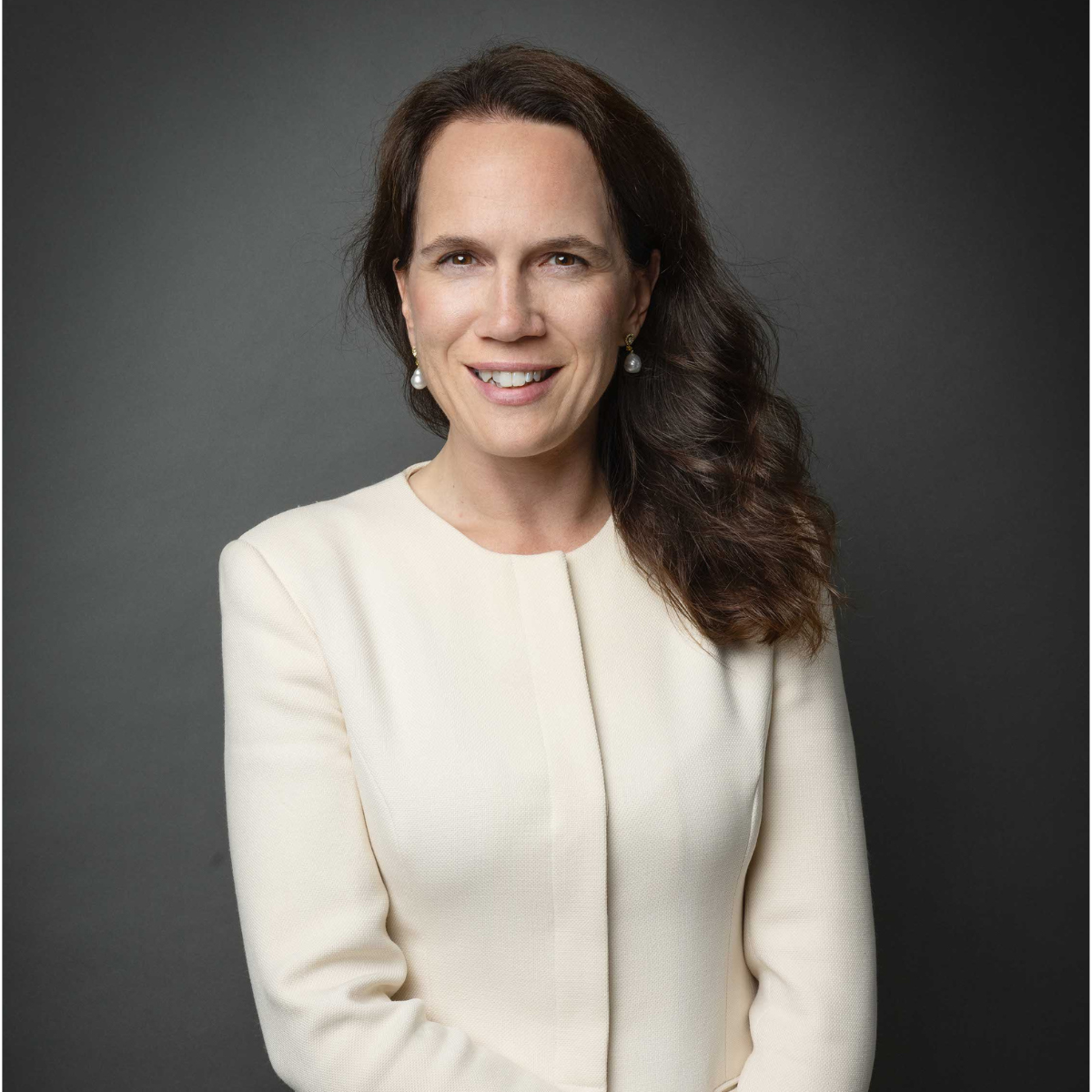
Xavier Bonna
Managing Partner of the Lombard Odier Group
Biography
- Master's Degree from IHEID – Graduate Institute of International and Development Studies
- Managing Partner at Lombard Odier Group since January1, 2025
- Previously Senior Private Banker, Head of the French-speaking Belgian Market, and Head of Portfolio Management at Lombard Odier
- Early career at Merrill Lynch and then Edmond de Rothschild
What makes our profession unique is the human connection.
Xavier Bonna