ISFB Insight
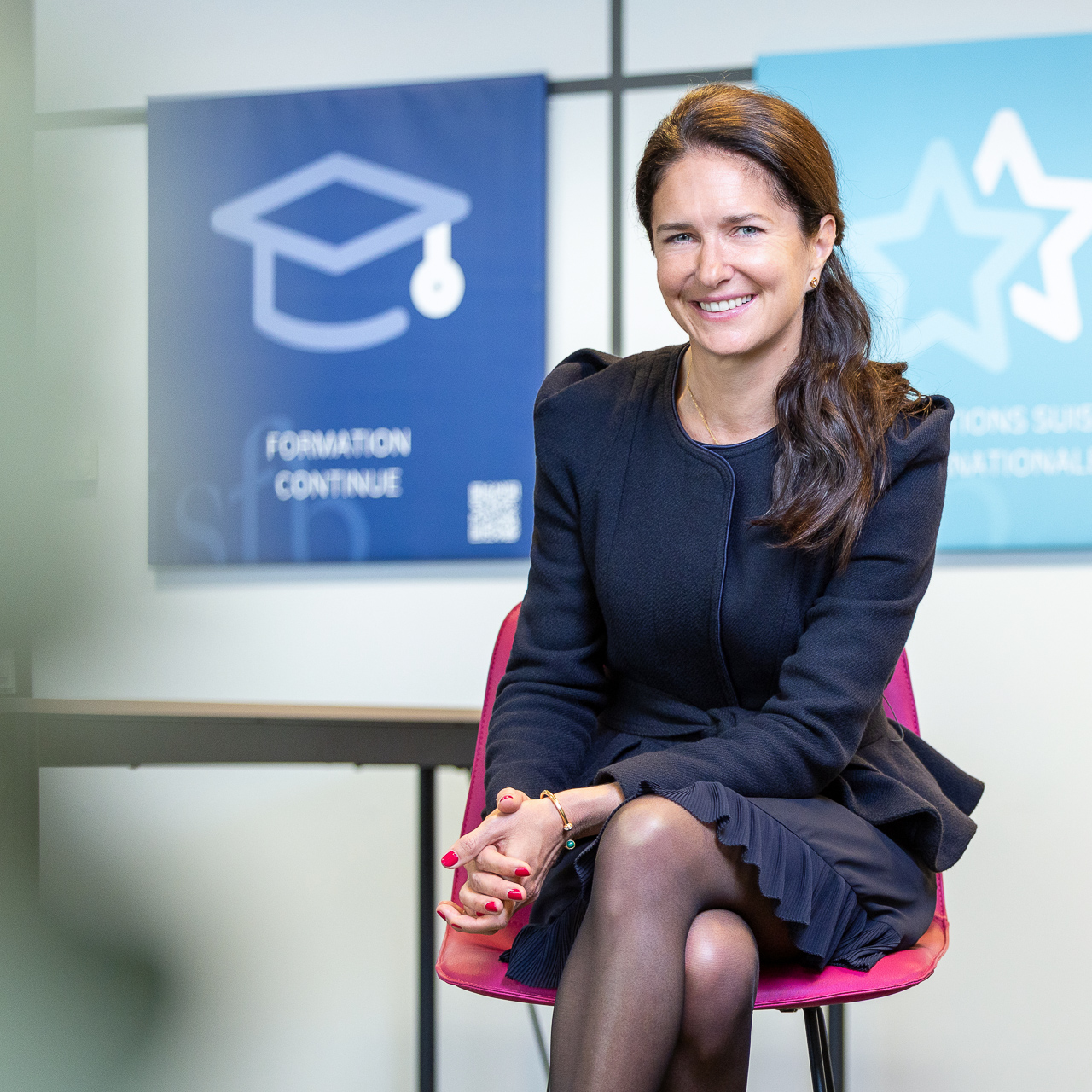
Pauline Duriez: How HSBC Uses Certification as a Tool for Skills Development
November 26, 2026
As the winner of the 2026 ISFB Member Award, HSBC has embarked on an SAQ CWMA certification process for several employee groups in Geneva and Zurich. Pauline Duriez, HR & Learning Manager, discusses the challenges of this project, the support provided to employees, and how the certification contributes to skills development and the quality of advisory services.
Interview by Maryse Gabbay, Member of the ISFB Executive Board in charge of the Certification Division
Pauline Duriez, HSBC has been working since 2025 to obtain SAQ CWMA certification for several groups in Geneva and Zurich. What were HSBC’s objectives in launching this project, and why was this initiative important to the bank?
This program is part of our ongoing commitment to maintaining and strengthening our clients’ trust. Through an external certification recognized by the financial sector, we have been able to reaffirm the importance we place on the quality and consistency of the advice provided by our relationship managers. This initiative was therefore important for both the bank and our employees, and is part of our broader commitment to earning and maintaining the trust our clients place in us.
Certifying multiple teams is a major undertaking, both from an organizational and a human perspective. What were the main challenges you faced, and how did you support them in your role as HR & Learning Manager?
Preparing for certification requires a sustained commitment, in addition to professional responsibilities, workload, and client service. We have taken this operational reality into account by adapting the program’s format and pace, while maintaining the certification requirements.
Certification can be a source of motivation, but it can also raise questions as the exam approaches. At ISFB, we have made it a priority to answer employees’ questions and provide them with appropriate support throughout the program.
The challenge was to strike the right balance between the program’s requirements, the participants’ needs, and the constraints posed by their day-to-day professional responsibilities.
Beyond simply earning a certificate, how do you think the SAQ program contributes to the professional development of employees and, more broadly, to the quality of the advice provided to HSBC clients?
The value of this initiative extends far beyond simply passing the exam. It provides an externally recognized framework for developing and demonstrating the knowledge and experience that contribute to the quality of the advice provided to clients.
The program enabled our relationship managers to deepen their understanding of client needs, products and services, the regulatory framework, risk management, and a comprehensive approach to client relationships.
From the clients’ perspective, this aspect is essential. They must be able to rely on competent and thorough advisors who seek to understand the full scope of their goals. Certification is no substitute for experience, professional judgment, or HSBC’s comprehensive control framework, but it provides an important foundation for carrying out these responsibilities with greater confidence and consistency.
We are very proud of our employees, who have successfully prepared for their certification while continuing to meet the high demands of their day-to-day roles.
HSBC and the ISFB have developed a program tailored to the bank’s needs, featuring training, self-study tools, exam preparation, and support for participants. What did you particularly appreciate about this collaboration?
Employees who participated in the program particularly appreciated the quality of the training and the professionalism of the trainers.
From my perspective, I appreciate the collaboration with the ISFB, which focuses on supporting participants, managing relationships, and ensuring operational coordination. For a project of this scale, clear coordination is essential in order to adapt the program when necessary, respond to requests, and support participants throughout their journey.
Looking back on the project since its launch, what advice would you give to a bank that would like to undertake a large-scale SAQ certification process of its own?
Learning is a continuous, long-term process that does not end with certification: knowledge and skills continue to develop over time. I recommend prioritizing in-person courses, supplemented by self-study tools. In-person training fosters discussion, group dynamics, and participation.
It is also important to plan the program well in advance to account for employees’ workloads while maintaining a challenging pace. This allows participants to make steady progress through the program without losing sight of the overall goal: earning certification.
The success of a project of this type depends on the quality of the content, effective coordination with the teams, and the ability to integrate preparation into employees’ daily work responsibilities, thereby fostering effective professional development.
© Institut Supérieur de Formation Bancaire (ISFB). All rights reserved.
The analyses and content published by the ISFB may be quoted or reproduced in part, provided that the source is clearly mentioned. Any full or substantial reproduction of this article in another medium or format is subject to the prior written authorization of the ISFB. In order to facilitate reading and without any intention of discrimination, the masculine gender is generally used, in accordance with the grammatical rule that allows it to be used as a neutral value to refer to a group of people comprising both men and women. This publication is intended for ISFB members and their employees in Switzerland, as well as anyone interested in finance in Switzerland. It is not intended to be read or distributed in any jurisdiction where its distribution would be prohibited.