CEO Interview
Running a bank means wanting to build something for the long term. Interview with Kim-Andrée Potvin, CEO of Bonhôte Bank.
January 22, 2026
From internal auditing to senior management, Kim-Andrée Potvin has built a career deeply rooted in an understanding of the inner workings of banking. Having become CEO of Banque Bonhôte in early 2025, she shares her career path, her vision of the role of a leader, and her view of the key skills required in the banking sector in this interview. A direct, candid discussion about motivation, continuous learning, and collective intelligence at the heart of leadership.
Interview by Mathias Baitan, January 13, 2026 (Neuchâtel)
You took up your position as CEO of Banque Bonhôte in early 2025, after serving as COO. How did your career path unfold?
I started my career in internal banking auditing, which, looking back, I consider to be one of the most comprehensive training programs. You cover all of an institution's activities—taxation, compliance, legal, HR, sales, operations—and you really understand how a bank works. It's very formative.
At BNP Paribas, I worked in demanding international environments. At the age of 30, I was audit manager for the Benelux region, then I was appointed COO two years later when Fortis was acquired in Luxembourg. This merger phase was intense: teams, systems, and cultures had to be brought together. That's where I learned to manage, often in the field, and to surround myself with people who were different from me.
Being COO means mastering processes and continuously improving them. Operations are a bit like organizing the Olympic Games: when everything runs smoothly, no one talks about it, but the slightest hiccup makes everything visible. This role also allowed me to develop a very entrepreneurial mindset. So when the opportunity to become CEO arose, it seemed natural to me: not a quest for status, but a desire to take on greater responsibility and build something lasting.
How does the transition from COO to CEO change the way the organization is viewed?
As COO, the focus is mainly internal: keeping the machine running, ensuring the quality of processes, supporting teams. The customer is often internal.
As CEO, the focus broadens to include external stakeholders: customers, partners, entrepreneurs, and the ecosystem. However, having been COO remains a real strength, because you understand the inner workings of the organization and the concrete impacts of decisions. People sometimes contrast the two career paths, considering that a COO who becomes CEO will be more cost-oriented, while someone with a sales background will be more customer-focused. I find this view simplistic. What matters is not where you come from, but your desire to perform the role and commit fully to it.
What made you want to join Bonhôte and then take over its management?
Bonhôte is a bank on a human scale, with teams based in Neuchâtel, Solothurn, Lausanne, Biel, Zurich, and Geneva. I found an environment where values really matter: passion, enthusiasm, and authenticity in relationships. You can feel it immediately.
Entrepreneurial spirit and short decision-making processes were also decisive factors. The transition to the role of CEO happened naturally, at the right time, in a climate of trust.
How would you describe your management style today?
It's always difficult to describe your own style; others often do it better. Nevertheless, I would say that it is based on two dimensions that may seem paradoxical but are complementary. On the one hand, I am very organized and rigorous. I attach great importance to things being done well, right to the end. On the other hand, I am very open-minded and deeply convinced of the value of collective intelligence.
I have lots of ideas, some very good and others not so good (laughs), and I like to test them out with my teams. Co-construction is essential for me. Top-down isn't my style. I often refer to the principle of subsidiarity: the customer at the top, the organization in the middle, and the CEO providing support.
I am also a very spontaneous person. I don't play a role. What I think is often written all over my face. I am the same person with my colleagues, with my board of directors, and in my personal life. Here, we are on a first-name basis and call each other by our first names. Enthusiasm is key: inspiring others, getting them on board, and creating positive momentum.
How do you make decisions in an environment as standardized as banking?
My decision-making is very instinctive. On the rare occasions when I haven't followed my intuition, things haven't gone well. Of course, in banking, everything is extremely well documented, analyzed, and standardized. We have a lot of quantitative information that we use for rigorous risk management.
But what often makes the difference are less measurable factors: how a customer feels, the quality of a relationship, the human context. In Quebec, we talk about common sense. This ability to weigh things up and get to the heart of the matter remains, in my opinion, a key skill for leaders.
What do you see as the main challenges in terms of skills in the banking sector today?
I don't think the bank suffers from a lack of training, quite the contrary. High standards for continuing education are well established in our industry. Continuing education certifications allow specialists to develop throughout their careers, right up to retirement, which is very motivating.
In my opinion, the main challenge lies in the attractiveness of the sector. Young people today may be more attracted to technology or sectors perceived as more "glamorous." Banking sometimes suffers from an image that does not reflect the richness and diversity of its professions. To address this, we need to show concrete examples and tell stories, as you are doing with this series of interviews for the sector in French-speaking Switzerland. Often, disinterest simply stems from a lack of information. Once people understand what banking professionals actually do, their interest is rekindled.
What role do you think lifelong learning plays?
I was raised to believe that anything is possible if you put your mind to it. My parents always told me that. Figure skating also taught me that you often fall down, but you have to get back up again. The same applies in your professional life.
I firmly believe that we never stop learning. Continuing to educate ourselves, even when we are established in a role, is essential. It keeps us curious, open-minded, and up to date. It is also a way to remain humble.
When I was younger, I often agreed to work on topics that I didn't yet fully understand. This forced me to learn quickly and thoroughly. Even today, I prefer to work with people who continue to learn, regardless of their level of experience. Continuous learning is a skill in itself.
When I was younger, I thought that only the destination mattered. With time, I realized that the journey is just as important. It's a realization that comes with experience, as my grandfather often reminded me: "If youth knew, and if age could."
© Institut Supérieur de Formation Bancaire (ISFB). All rights reserved.
The analyses and content published by the ISFB may be quoted or reproduced in part, provided that the source is clearly mentioned. Any full or substantial reproduction of this article in another medium or format is subject to the prior written authorization of the ISFB. In order to facilitate reading and without any intention of discrimination, the masculine gender is generally used, in accordance with the grammatical rule that allows it to be used as a neutral value to refer to a group of people comprising both men and women. This publication is intended for ISFB members and their employees in Switzerland, as well as anyone interested in finance in Switzerland. It is not intended to be read or distributed in any jurisdiction where its distribution would be prohibited.
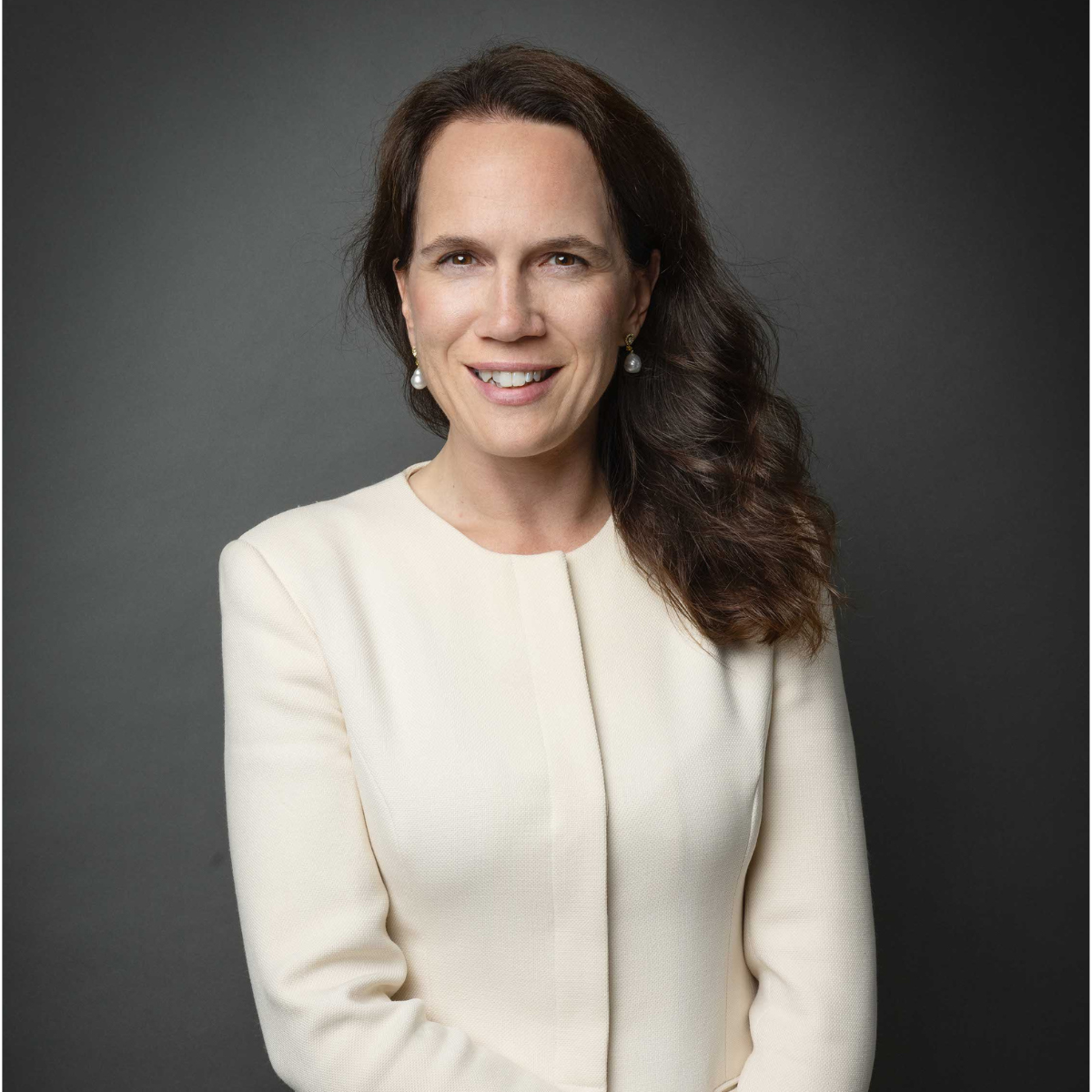
Kim-Andrée Potvin
CEO
Banque Bonhôte
"What matters is not where you come from, but the desire to fulfill your role to the fullest."
Biography
- CEO of Banque Bonhôte since January 2025
- Initial career in internal banking auditing, then in various operational management roles, notably at BNP Paribas, in demanding international environments.
- Academic background: Bachelor's degree – McGill University; Master's degree – University of Sherbrooke