ISFB Insight
“You Can’t Build a Career on Your Own”: An Interview with Pierre-Alain Leuenberger, CEO of Banque Cantonale Neuchâteloise
June 26, 2026
Pierre-Alain Leuenberger built his career in banking step by step, from a banking apprenticeship all the way to the Executive Management of the Neuchâtel Cantonal Bank. In this interview, he reflects on what shapes a leader’s career path: practical experience, continuing education, the opportunities he’s been given, as well as managerial courage, the quality of trusting relationships, and the ability to develop skills in a rapidly evolving banking sector.
Interview by Mathias Baitan, June 12, 2026
Mathias Baitan: Pierre-Alain Leuenberger, your educational background is similar to that of many bank executives in Switzerland. Could you tell us about it?
Pierre-Alain Leuenberger: My career path has been fairly typical of the Swiss model. I started with a banking apprenticeship, then went on to earn a federal diploma—what was then called the “federal master’s degree”—while balancing work and training until I was about 25. That foundation was very valuable to me because it gave me a very practical understanding of the profession.
Around that time, I also made an important decision: to go abroad to learn German. Looking back, I believe that decision was pivotal. This linguistic exposure has helped me greatly in my career. In a country like Switzerland, and in the banking sector where relationships often transcend language barriers, this openness is very important.
During that time, I also worked in auditing for five years before moving into lending in the mid-1990s. In 2005, I joined the Banque Cantonale Neuchâteloise, working in the corporate banking division. This career path gave me solid expertise in financing and gradually exposed me to other aspects of the banking industry.
Another important milestone was the MAS in Banking & Finance program, which I completed between 2013 and 2015 at the ISFB as part of a program offered in partnership with a university. This program gave me an even broader perspective on banking, covering topics such as governance, organization-wide risk management, and strategy. This broader perspective is essential for advancing to executive roles.
Your career path also highlights the role of those who can recognize potential before it becomes fully apparent. How important do you consider this ability to be in the role of a leader today?
Because you can never build a career on your own, there have been times when people have placed their trust in me even before I had actually taken on the role they entrusted to me. They took a chance on my potential, not just on my proven track record.
In my view, this is a very important aspect of leadership development. You can’t limit yourself to technical skills or what’s listed on a resume. You also have to look at personal qualities, values, and the ability to lead, make decisions, and bring people together. Some people know how to recognize these qualities. They give you a chance, and that chance also requires you to rise to the occasion.
Today, I, in turn, am trying to do the same thing. It’s very rewarding to be able to create opportunities for others, to see someone make progress, gain confidence, and grow in a role. Part of being a leader is also about bringing out people’s talents.
What qualities do you think are the most difficult for a manager to develop?
Managerial courage. It’s a quality that’s often talked about, but one that remains difficult to put into practice. When a situation becomes complicated, you have to be able to address it quickly, not let problems fester, and handle issues with clarity.
This requires good judgment. Managerial courage isn't about being tough. It's about saying the right things at the right time, with respect, but without putting off necessary decisions indefinitely.
It’s also important to fully understand employees’ motivations. Ambition, for example, can be very positive. But we need to consider what it serves. Does it serve the company, the team, or the customer? Or is it solely for the sake of individual advancement? This perspective is important for building strong teams that are committed to shared success.
Your military experience has also played a role in your leadership style. What has it taught you?
I took on team leadership responsibilities at a very young age—starting when I was 20. I don’t consider it a direct part of my career path, but that experience left a lasting impression on me. It taught me to adapt quickly to different situations and people.
It also helped me develop a form of emotional intelligence. When you lead a team, it’s not enough just to give instructions. You have to understand people, sense tensions, adapt your communication style, and create the conditions that allow everyone to fulfill their role.
In my management style, I strongly believe in mutual growth. A team functions well when everyone grows thanks to one another. Delegating responsibilities is important, but it’s not enough. You also have to provide the resources to fulfill those responsibilities, share your experience, and support the person as they grow.
How do you view current trends in the banking sector?
The industry is evolving rapidly. Technological risks have taken on considerable importance. Cyber risk, for example, has become a central concern, whereas it was hardly discussed at all just a few years ago.
This requires banks to adapt their skills, tools, and security measures, as well as their way of working. At the same time, regulatory requirements continue to tie up a significant amount of resources.
Given this, I believe that collaboration among institutions will become increasingly important. Certain infrastructure, technological solutions, or areas of expertise can be shared. Of course, each bank retains its own identity, positioning, and customer relationships. But on certain issues, working together can make a lot of sense.
In your opinion, is artificial intelligence changing the role of bankers?
Yes, but above all, it builds on a trend that’s already underway. Today’s clients come in with a very high level of knowledge. They’ve read up on the subject, compared options, tested tools, and consulted multiple sources. The banker’s role is therefore no longer simply to provide an answer.
Its value is shifting toward something else: providing meaning, explaining risks, helping clients take a step back, and putting a financial decision into the context of their life situation. This is especially true in long-term relationships.
Interpersonal skills are therefore becoming even more important. Empathy, active listening, the ability to put oneself in the client’s shoes, and discussing life plans or succession planning are becoming central to our work. Technology can process a great deal of information, but the relationship of trust remains a central element of our profession.
The role of CEO is often associated with a certain kind of loneliness. Is that something you experience?
Not really. I think it depends a lot on the quality of the relationships you build around you. As for me, I can rely on strong, trusting relationships.
The relationship between senior management and the Board of Directors is therefore crucial. When it is healthy, transparent, and based on trust, it allows strategic and operational issues to be addressed calmly. Conversely, if this relationship becomes strained, it can jeopardize the entire organization.
This does not mean that a leader should never make decisions on their own. At certain times, the responsibility for a decision clearly falls to them. But that decision is stronger when it is based on frank prior discussions, clear governance, and relationships of trust built over time.
Ultimately, what is your view on training as part of a career path toward becoming a bank executive?
Continuing education plays an important role because it forces you to step outside your daily routine. It opens the door to other topics, other perspectives, and other ways of thinking about banking.
Throughout my career, she has guided me through the transitions between different stages: from a line role to management, and then from management to a broader view of the company. That’s also what matters in banking today: remaining open to learning, staying open-minded, and understanding areas that you haven’t yet fully mastered.
A bank executive can’t know everything. But he must know how to listen, ask questions, make decisions, and surround himself with the right people. Training helps develop this approach. Personally, I continue to learn every day from the people I work with, and I continue to pursue formal education.
© Institut Supérieur de Formation Bancaire (ISFB). All rights reserved.
The analyses and content published by the ISFB may be quoted or reproduced in part, provided that the source is clearly mentioned. Any full or substantial reproduction of this article in another medium or format is subject to the prior written authorization of the ISFB. In order to facilitate reading and without any intention of discrimination, the masculine gender is generally used, in accordance with the grammatical rule that allows it to be used as a neutral value to refer to a group of people comprising both men and women. This publication is intended for ISFB members and their employees in Switzerland, as well as anyone interested in finance in Switzerland. It is not intended to be read or distributed in any jurisdiction where its distribution would be prohibited.

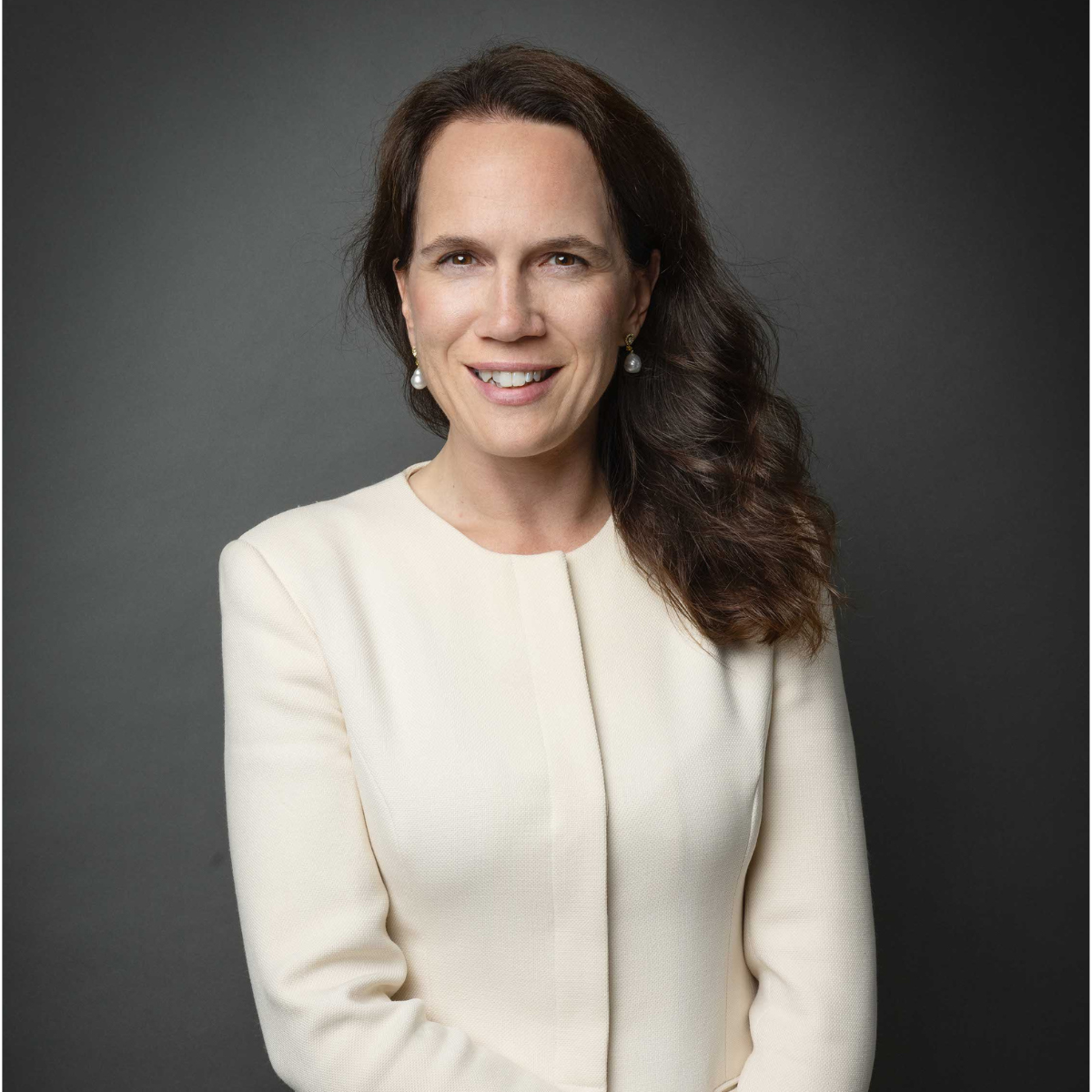
Photo Credit: BCN
Pierre-Alain Leuenberger
CEO of the Neuchâtel Cantonal Bank
Biography
- Chief Executive Officer of Banque Cantonale Neuchâteloise since 2017.
- He holds a Master of Advanced Studies in Banking & Finance from a University of Applied Sciences (HES) and a federal diploma in banking economics.
- Professional career in auditing, credit, and corporate banking: REBA Révision in Ostermundigen, Clientis Caisse d’Epargne CEC SA in Courtelary, and then BCN starting in 2005.
- At BCN, he served as Corporate Client Advisor, Director of Credit Management, and then Deputy General Manager before joining the Executive Management Team.
You can never build a career on your own. Some people put their trust in you even before you’ve proven yourself. That opportunity also requires you to rise to the occasion.
Pierre-Alain Leuenberger